

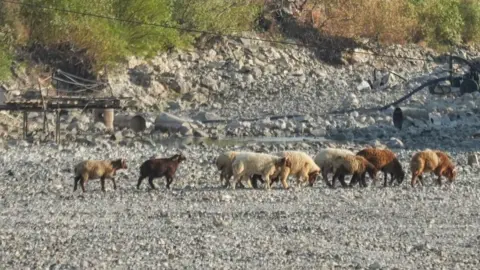
Close to Seqalbia by central Syria, wheat fields ought to be golden and full with crops.
Yet, a local farmer's plot sits dry, yielding just a fraction of its normal output.
"Recently proved catastrophic due to the lack of rain," remarked the 46-year-old grower.
The land generated just 190kg per unit—well under the typical amount seen in a good season.
"{We did not recoup what we spent; we've faced losses. I can't afford next season's planting," he continued.
With a pair of teenage family members to feed, he is borrowing assistance from relatives to make ends meet.
Countrywide Emergency
This plight is seen around the country, where the worst dry period in 36 years has reduced crop yields by 40%.
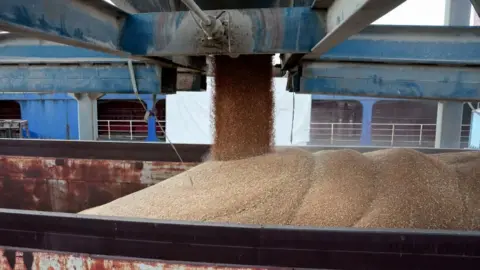
A projected wheat shortfall of 2.73 million tonnes looms this season—representing the yearly nutrition of over 16 million people.

Rising Food Insecurity
Lacking increased support or the means to purchase wheat, the situation may worsen severely.
Over millions of Syrians—around the majority of the public—presently struggle to get sufficient food.
Among them, millions endure acute malnutrition, including 1.3 million in extreme situations.
Precipitation has fallen by almost seventy percent, crippling the majority of dependent farmland.
"It represents the difference between families staying in their villages or having to leave," stated an representative.
Household Hardships
Agricultural communities are offloading herds to make up for reduced earnings, limiting their food intake.
Undernourishment cases among young ones and pregnant women are growing.
Wheat is a essential commodity in Syria, the main ingredient in bread and noodles—low-cost necessities that are now rising in price.
In the case of Sanaa Mahamid who is thirty-nine, purchasing staples has become very hard.
Having multiple children, she counts on her sons' wages, which fall short of daily costs.
"Occasionally we need to get cash only to buy food," she said.
Previously, a portion of flatbread was priced at 500 money, but now it is much more.
To feed her dependents, she requires two units a daily—a cost of nine thousand pounds, before other items.
Government and Global Efforts
The crisis presents a major obstacle for the administration, which is attempting to restore the economy after a long period of war.
Assistance agencies are supplying bread subsidies for those in need, but representatives caution that these are temporary solutions.
"Efforts are underway to enable farmers in the farming sector," stated a representative.
Monetary payments have been distributed to small farmers who lost the whole crops.
However, after years of war, Syria's agricultural system was already damaged by financial downturn, destroyed irrigation systems, and unusable fields.
Water Problem
In critical farming regions, crop fields require multiple irrigation cycles per season, but as a result of shortage of rain, many farmers are unable to manage.
"The agricultural worker's primary concern is obtaining resources," said a regional official.
Irrigation needs energy, and fuel prices have skyrocketed sharply, reaching 11,000 to twelve thousand pounds per litre.
Expensive energy costs and frequent outages have made equipment unaffordable for many growers.
Future Options
A focus for the administration is funding water infrastructure—like eco-friendly drip systems—to ensure resources more accessible.
However those plans require years and resources—options that wheat farmers lack right now.
Thus, for many Syrians across the nation, there is only one hope to rely on in the coming months: pray for rain.

